Research
Understanding flow and structure in complex networks
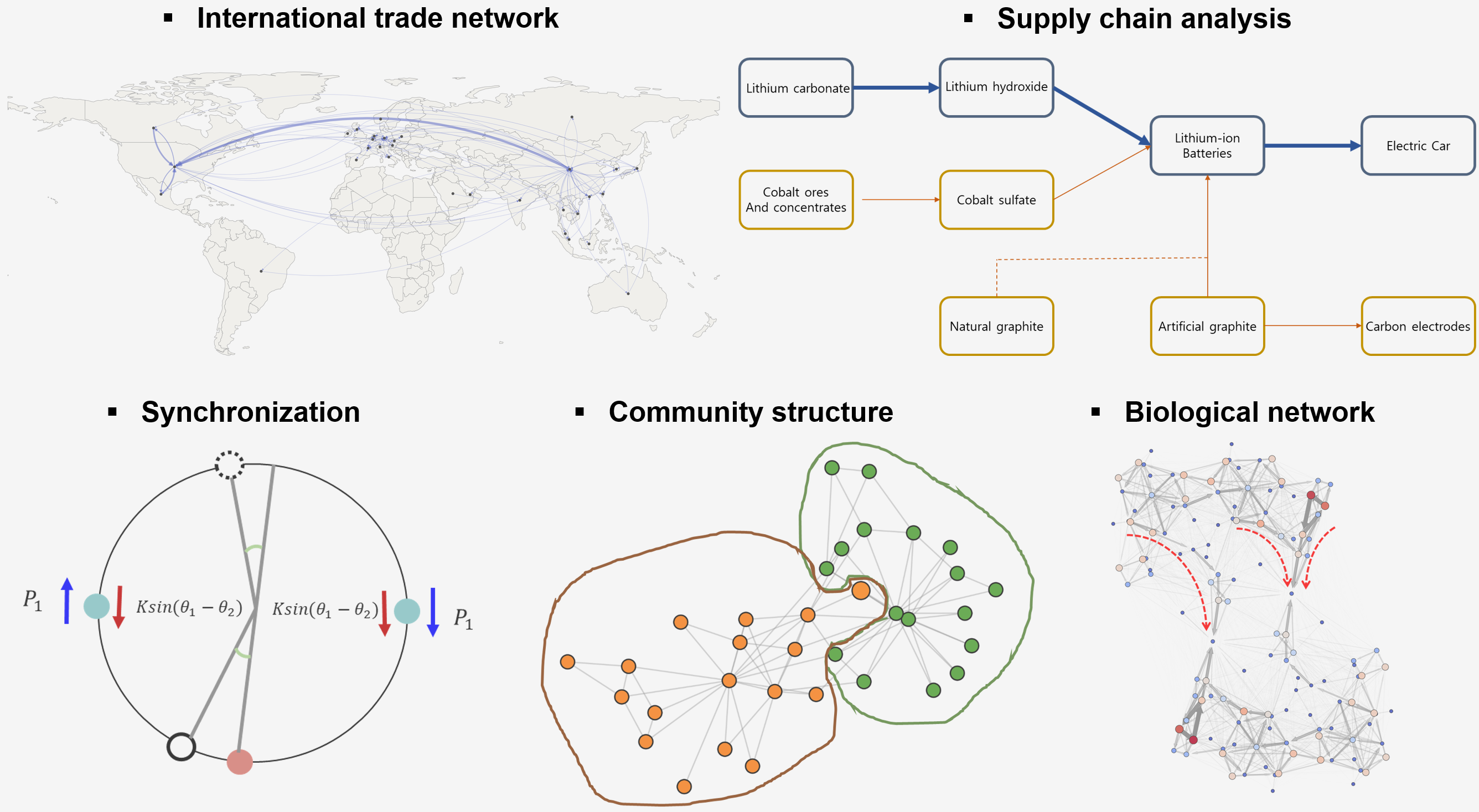
Trade networks encode capacity, structure, and dynamic response simultaneously. My work develops flow-only inference methods, multiresolution structural analysis, and shock-propagation models to reveal hidden constraints and systemic vulnerabilities.
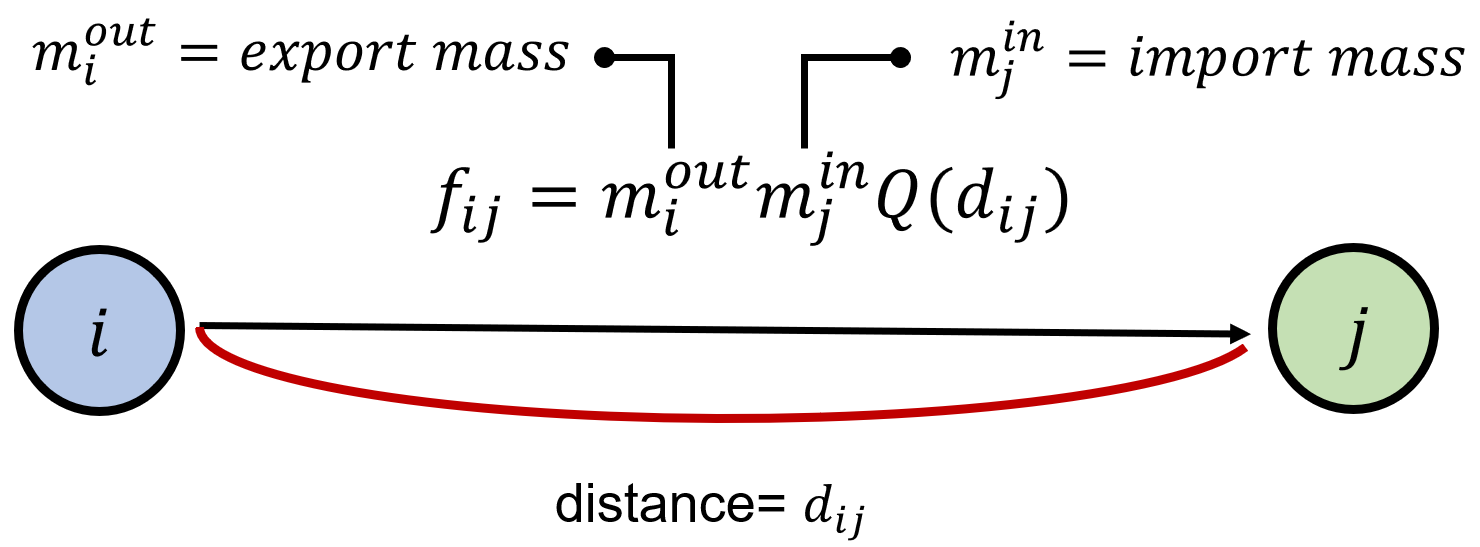
RQ: Can node-level trade capacity be inferred directly from flows without GDP-like proxies?
Method: A fixed-point decomposition that reconstructs intrinsic mass and a system-wide deterrence function purely from the bilateral flow matrix.
Result: Separates intrinsic trade capacity from external constraints and yields a self-consistent representation of global trade structure.
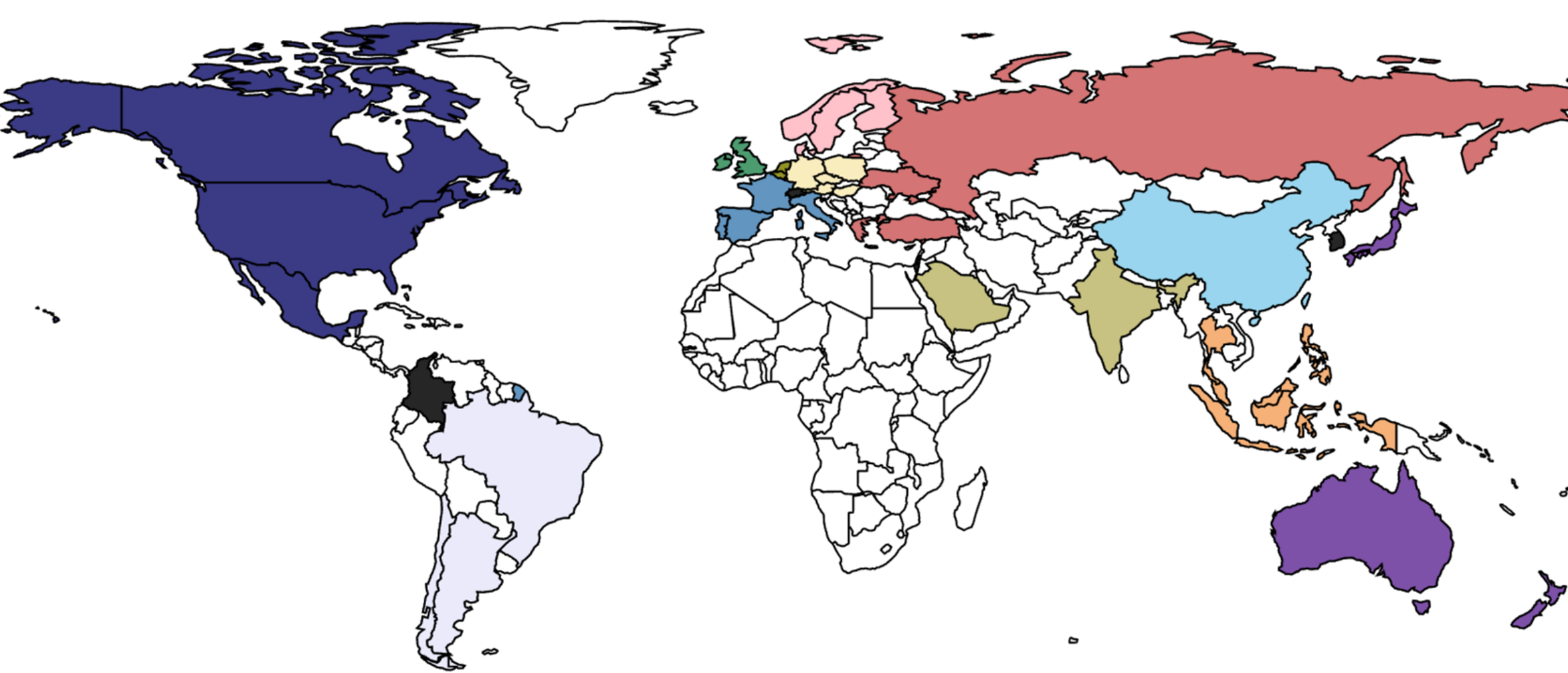
RQ: How do trade blocs reorganize across scales and where do structural inconsistencies emerge?
Method: Aggregating community-detection outputs across a continuum of resolutions to expose hierarchical bloc structure.
Result: Identifies scale-dependent inconsistencies that correlate with geopolitical and economic vulnerability.
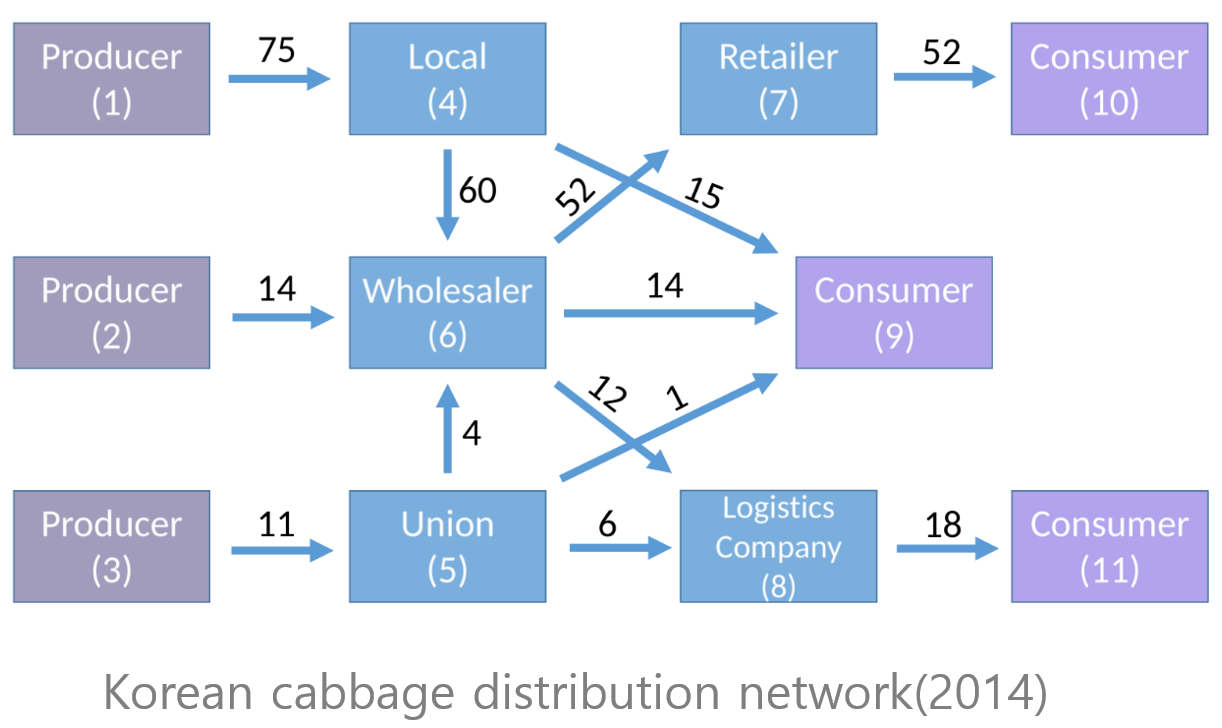
RQ: How do supply shocks propagate through real agricultural distribution networks?
Method: A dynamic price-adjustment model applied to an empirical cabbage-flow network.
Result: Upstream fluctuations trigger nonlinear downstream price responses driven by the network structure.
- Trade flows reflect both intrinsic capacity and externally imposed constraints; combining mass inference and multiresolution community analysis clarifies how these forces interact.
- Flow-only approaches provide a baseline against which geopolitical or policy-driven distortions become more visible.
- Scale-dependent community structure explains why similar trade volumes can imply different vulnerability profiles across countries.
- Shock-propagation work shows how local supply changes amplify or dissipate depending on the broader trade architecture.
- These approaches outline a unified view of trade as a layered flow system governed by capacity, structure, and dynamic response.
Community structure is rarely stable or hierarchical. My work examines how stochastic variation and scale-dependent reorganizations expose deeper mesoscale tensions hidden from single-resolution methods.
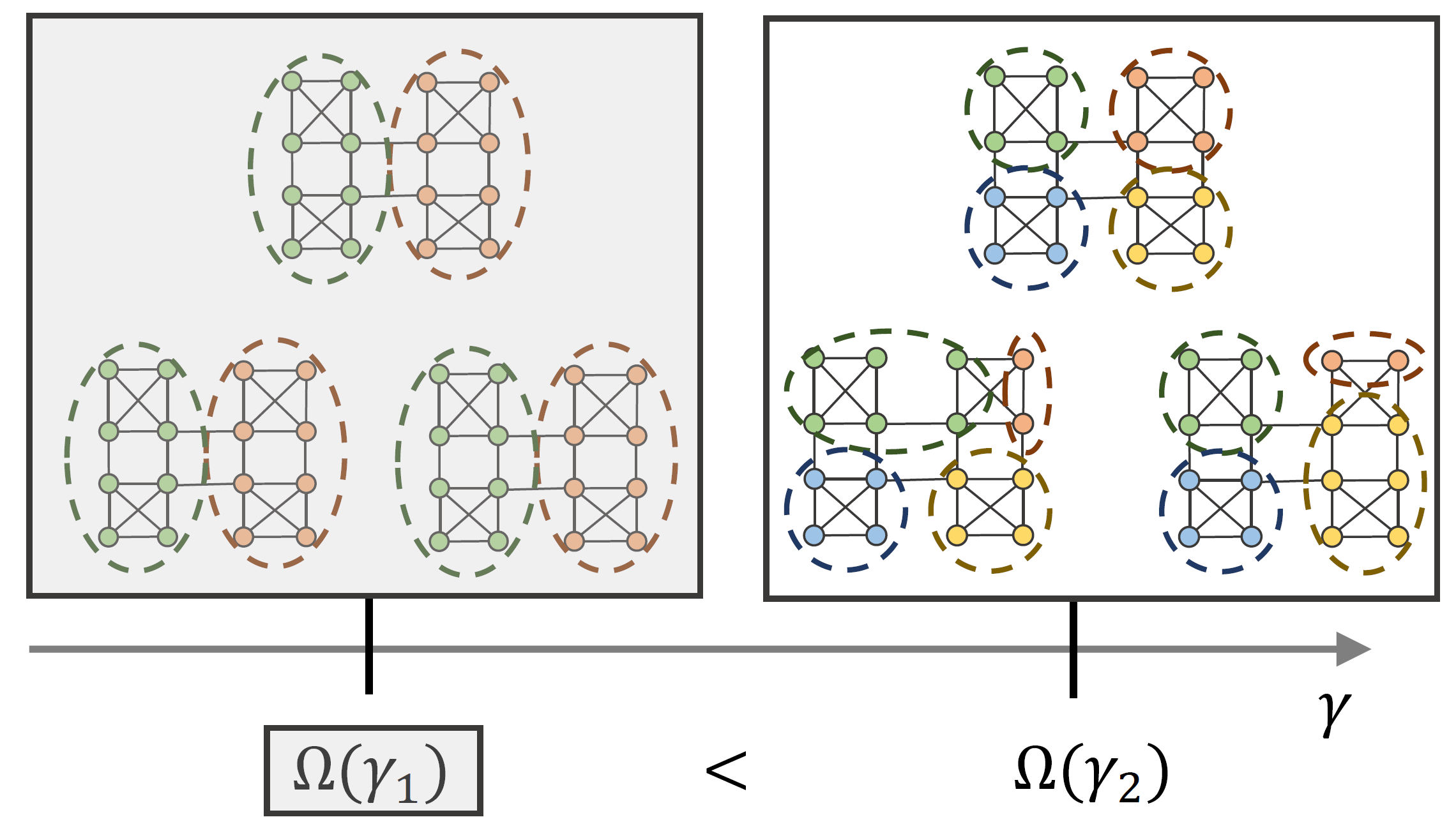
RQ: How reliable are communities under repeated stochastic detections?
Method: Quantifying global and local inconsistency across multiple detection runs to map a resolution–stability landscape.
Result: Distinguishes structurally meaningful communities from unstable partitions arising from stochastic ambiguity.
RQ: Do communities reorganize smoothly as resolution varies?
Method: Tracking discontinuous changes, particularly sudden drops, in community count across resolutions.
Result: Reveals nontrivial split–merge dynamics that challenge simple hierarchical interpretations.
- Both inconsistency analysis and scale anomalies show that mesoscale structure is rarely hierarchical or stable across scales.
- Global and local inconsistency together reveal which communities persist under both stochastic and scale variations.
- Anomaly detection indicates transitions between competing mesoscale organizations linked to functional or geopolitical tensions.
- This framework maps a landscape of plausible community structures rather than selecting a single partition.
- Applicable to biological, social, economic, and climate networks with overlapping mesoscale organization.
Synchronization improves most when interventions respect steady-state phase geometry rather than purely topological heuristics. My work studies optimal node and link additions within this unified phase-centric perspective.
RQ: Which natural frequency should a newly added oscillator adopt to enhance synchrony?
Method: A link-wise order-parameter approach that uses steady-state phase geometry to set optimal frequencies.
Result: Achieves stronger synchrony gains than global-order-parameter approaches.
RQ: Which candidate link most effectively improves network synchrony?
Method: Ranking edges using pseudo–steady-state phase differences and Lyapunov alignment indicators.
Result: Identifies structural hotspots where new links most effectively boost coherence across diverse network types.
- Node and link addition highlight a single principle: synchronization improves when interventions align with phase geometry.
- Phase-based metrics reveal long-range influence patterns invisible to purely topological measures.
- Optimal interventions require aligning intrinsic dynamics with structural features.
- This perspective provides a systematic basis for designing oscillator networks.
- Extensible to multilayer oscillators, time-varying links, and heterogeneous couplings.
Photosystem II demonstrates how biological systems integrate structural organization with quantum dynamics. My work reveals how pigment heterogeneity shapes excitation routing and functional robustness.
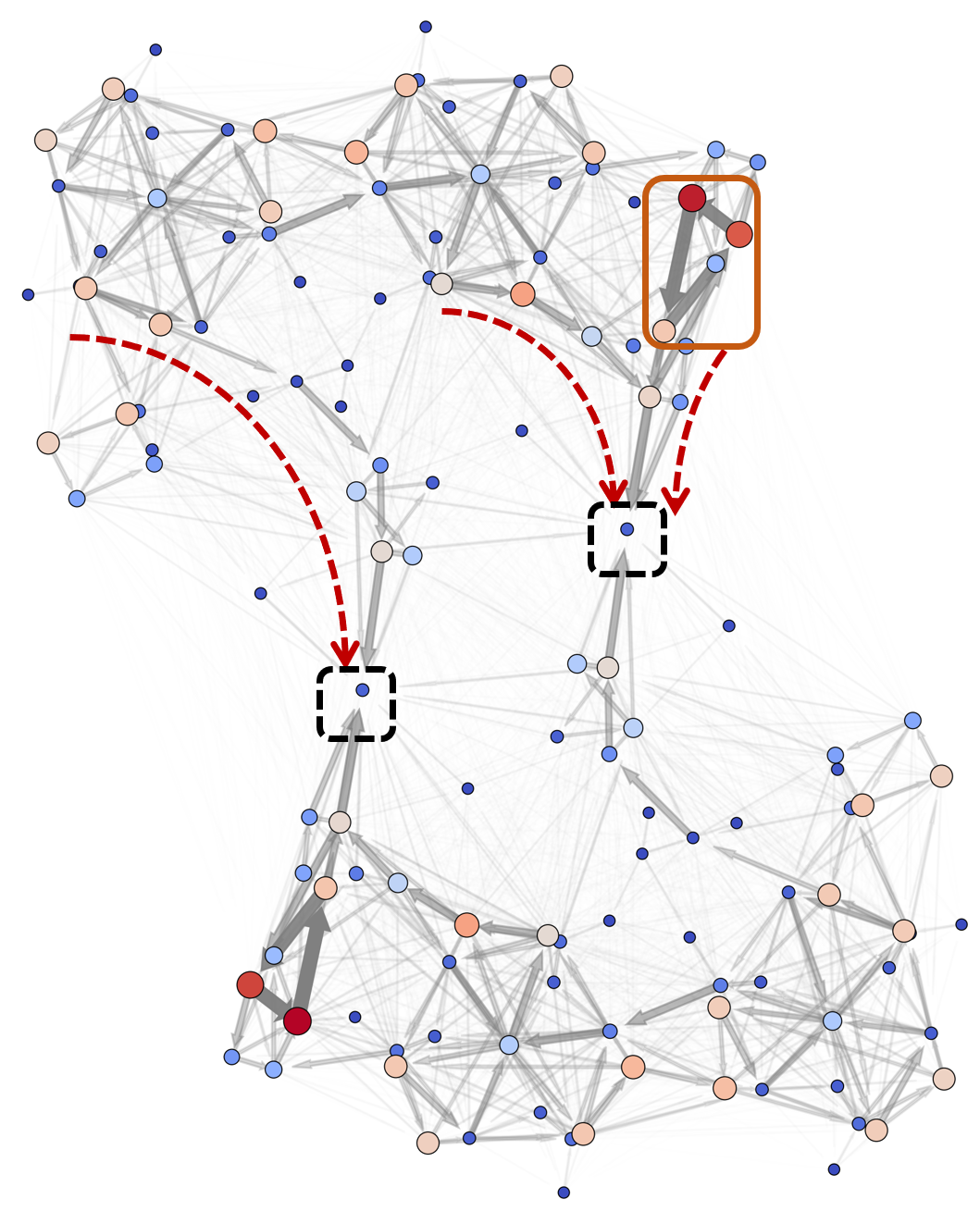
RQ: Why do chlorophyll a and b coexist in PSII?
Method: Network-based quantum dynamic simulations of excitation transport across the full PSII supercomplex.
Result: The natural a/b ratio routes energy through stability-preserving domains that prevent overflow under varying light intensities.
- Viewing PSII as a quantum transport network unifies physical, structural, and functional aspects.
- Pigment heterogeneity reshapes transport routes rather than merely adding spectral diversity.
- Domain-level routing maintains efficiency while preventing photodamage under fluctuating loads.
- The approach generalizes to other light-harvesting systems with coupled energetic and structural features.
- Provides a template for linking quantum dynamics to large-scale biological network organization.
Sea surface temperature variability emerges from coherent thermal provinces interacting through directional heat pathways. I use network-based heat flow models to reveal long-range climatic cascades and cross-basin coupling.
RQ: How do regional SST patterns interact to shape global heat redistribution?
Method: A heat-equation network model representing ocean regions as nodes with directional heat-transfer links.
Result: Reveals key communities such as ENSO and Indian–Atlantic coupling and clarifies their roles in global cascading heat dynamics.
- SST networks show climate variability arising from coherent thermal provinces linked by directional heat flow.
- Community structures, heat hubs, and cross-basin couplings form a multi-scale architecture affecting long-range dynamics.
- Directional heat flow reveals asymmetries hidden from correlation-based approaches.
- Links local SST variability to basin-spanning cascades and regime shifts.
- Provides a structural basis for comparing observations with climate model scenarios.
Optimization on rugged landscapes benefits from structured heterogeneity. My work explores how local environmental diversity accelerates global search in evolutionary algorithms.
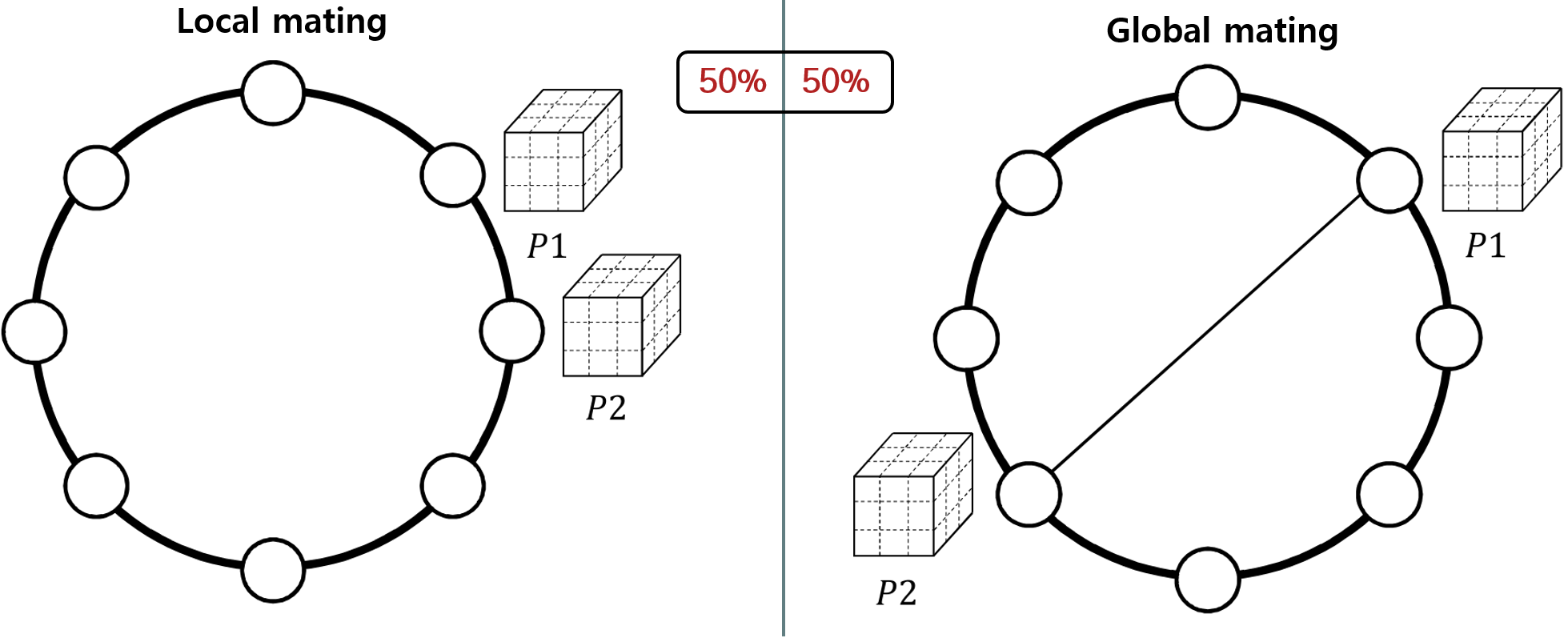
RQ: Do heterogeneous local environments improve the efficiency of evolutionary search?
Method: A ring-based GA where entities evolve under location-dependent environmental conditions.
Result: Achieves faster convergence to low-energy states in 3D spin-glass systems through structured cross-environment mating.
- Heterogeneous environments highlight the interplay between local convergence and global exploration.
- Structured diversity prevents premature convergence while accelerating search on rugged landscapes.
- Spin-glass benchmarks demonstrate the value of environmental gradients.
- Suggests a general principle: structured heterogeneity can outperform uniform search strategies.
- Applicable to combinatorial design, machine learning tuning, and physical energy minimization.
Rating systems often suffer from careless or adversarial users. I propose a deviation-based reliability framework that infers trust directly from rating behavior.
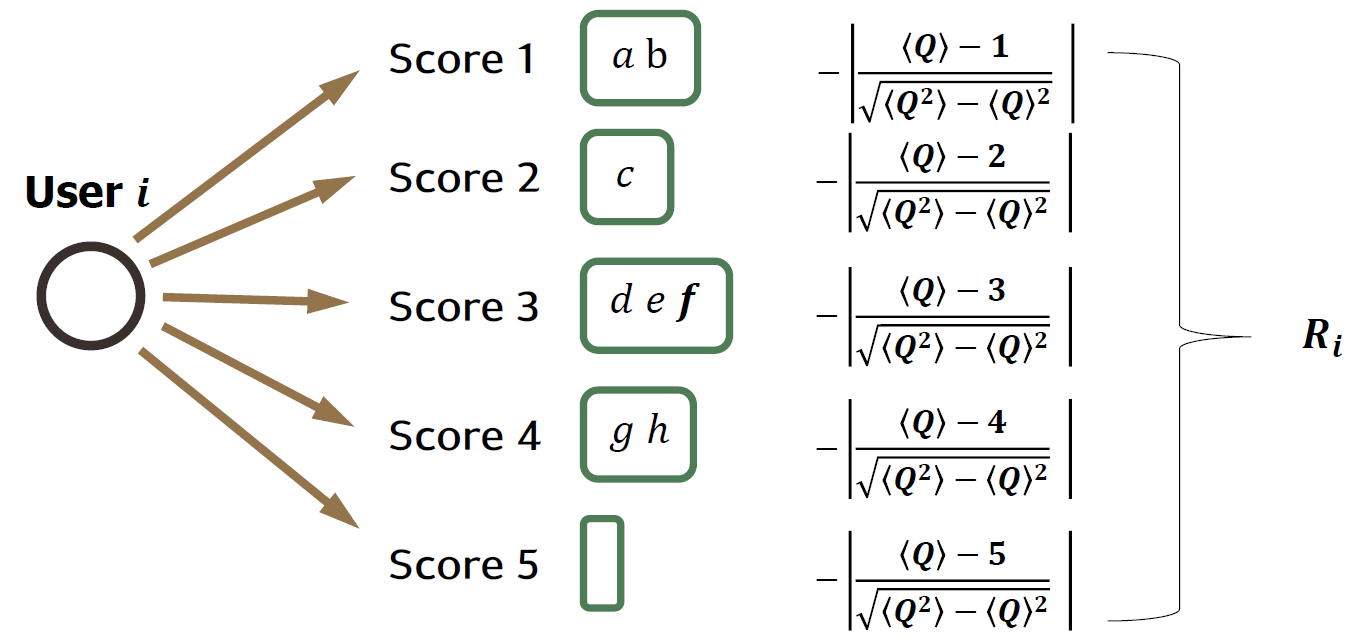
RQ: Can evaluator trustworthiness be inferred directly from rating behavior?
Method: Deviation-based reliability scores measuring the statistical significance of each user's departures from collective norms.
Result: Effectively filters careless or malicious evaluators and produces more stable rankings than simple averages.
- Deviation-based reliability infers trust without relying on user metadata or manual thresholds.
- Detects statistical inconsistencies even when absolute scores look normal.
- Stabilizes item rankings under random noise and targeted manipulation.
- Generalizes to sparse, biased, or strategically distorted evaluation systems.
- Applicable to recommendation platforms, peer review, and fraud detection.